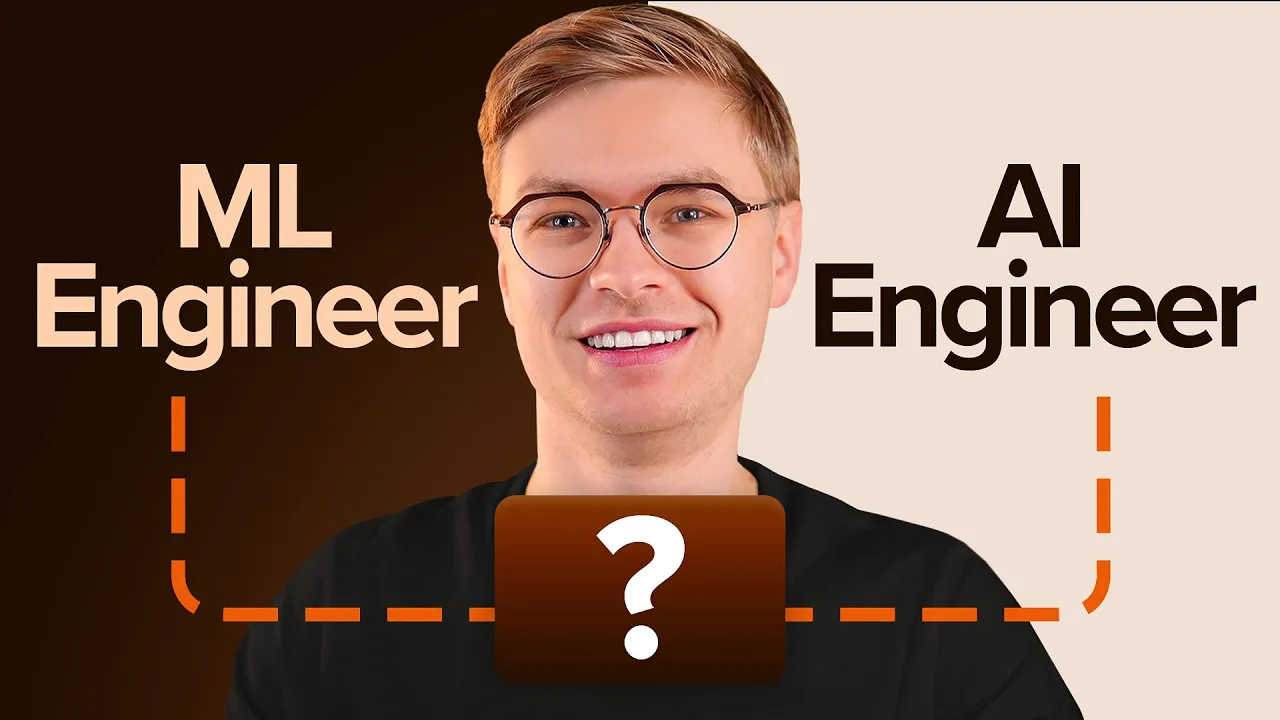
Why AI Engineering Is the Most Accessible Path Into AI Careers
The notion that you need a PhD to work in AI keeps talented developers on the sidelines. While that’s true for machine learning engineering, AI engineering tells a completely different story. This is the most accessible entry point into AI careers for self-taught developers and software engineers.
Software Engineering Skills Transfer Directly
AI engineering is software engineering with AI integration capabilities. If you already build web applications, APIs, or backend systems, you have the foundation. The additional skills involve understanding how to work with AI models, not how to build them from scratch.
You’re integrating existing models into applications that solve real problems. A transcription app using Whisper doesn’t require understanding the transformer architecture. A customer support tool using GPT-4 doesn’t need deep knowledge of attention mechanisms. You need to know which models work for which tasks and how to integrate them effectively.
This is fundamentally different from ML engineering, where mathematical foundations aren’t optional. You can’t train models without understanding gradient descent, loss functions, and optimization algorithms. That knowledge requires significant study, often through formal education.
No PhD Required, No Statistics Gauntlet
The barrier to entry in AI engineering is remarkably low compared to ML engineering. You don’t compete with PhDs in statistics or computer science. You compete with other software engineers who are learning AI integration skills.
The learning path is practical and project-based. Build a RAG application. Create a tool that uses vision models. Integrate speech-to-text into an existing product. Each project teaches you how AI models behave in real applications, which is exactly what employers need.
ML engineering requires theoretical mastery before you can contribute meaningfully. You need to understand why certain regularization techniques work, how different architectures compare, and when to use various optimization strategies. That knowledge base takes years to develop.
For developers evaluating their options, understanding what AI developer jobs actually require clarifies why the AI engineering path is more approachable.
The Learning Curve Favors Builders
AI engineering rewards the “build and iterate” mindset. You create something functional quickly, test it with users, and improve based on feedback. This matches how most self-taught developers already learn.
Start with a simple project using an AI API. Get it working. Deploy it. Learn from what breaks. Add features. This progression feels natural because it mirrors traditional software development.
ML engineering demands extensive upfront learning before you can build anything meaningful. You can’t just start training models without understanding the mathematics. You can’t effectively debug model performance without knowing what metrics matter and why. The feedback loop is much longer.
Future-Proof Skills for an AI-Powered World
As AI models become more powerful and accessible, the need for AI engineers grows. Every company wants to integrate AI into their products, but few have the internal expertise. Someone needs to bridge the gap between powerful foundation models and practical business applications.
Even if AI reaches incredible capabilities, integration remains a human problem. You need engineers who understand software architecture, user experience, error handling, and production reliability. Adding AI to that skillset creates immediate value.
The work involves real engineering challenges. How do you handle rate limits on AI APIs? What happens when the model produces unexpected outputs? How do you test AI-powered features? These problems require software engineering skills, not theoretical AI knowledge.
Building a strong AI engineering portfolio demonstrates these practical skills more effectively than academic credentials.
The Realistic Path Forward
Start by adding AI features to projects you already understand. If you build web apps, add a chatbot using an AI API. If you work on data processing, integrate classification or extraction models. The goal is learning how AI models behave in real systems.
Focus on integration patterns and best practices. Learn how to handle streaming responses from language models. Understand when to use different model sizes based on latency requirements. Figure out prompt engineering through experimentation.
Don’t worry about understanding transformer architectures or attention mechanisms unless they genuinely interest you. Those details matter for ML engineering but are largely irrelevant for AI engineering. Your value comes from shipping working products that solve real problems.
The current demand for AI engineering skills reflects how few developers can confidently integrate AI into production systems. This gap represents opportunity for those willing to learn through building.
Making It Practical
AI engineering success comes from hands-on experience, not academic credentials. Build projects that demonstrate your ability to integrate AI effectively. Show that you understand the practical challenges of working with AI models in production.
The accessibility of this path doesn’t mean it’s easy. You still need to develop new skills and push beyond your comfort zone. But the learning curve is manageable for developers with existing software engineering experience.
This is the realistic entry point into AI careers for self-taught developers. Not because it’s a shortcut, but because it values the skills you already have and builds on them in practical ways.
See the full explanation and watch a live demo of building with AI: AI Engineering Accessibility on YouTube
Ready to learn AI engineering with other self-taught developers? Join our community where we share practical projects and integration strategies.