AI Augmentation vs Replacement for Business ROI
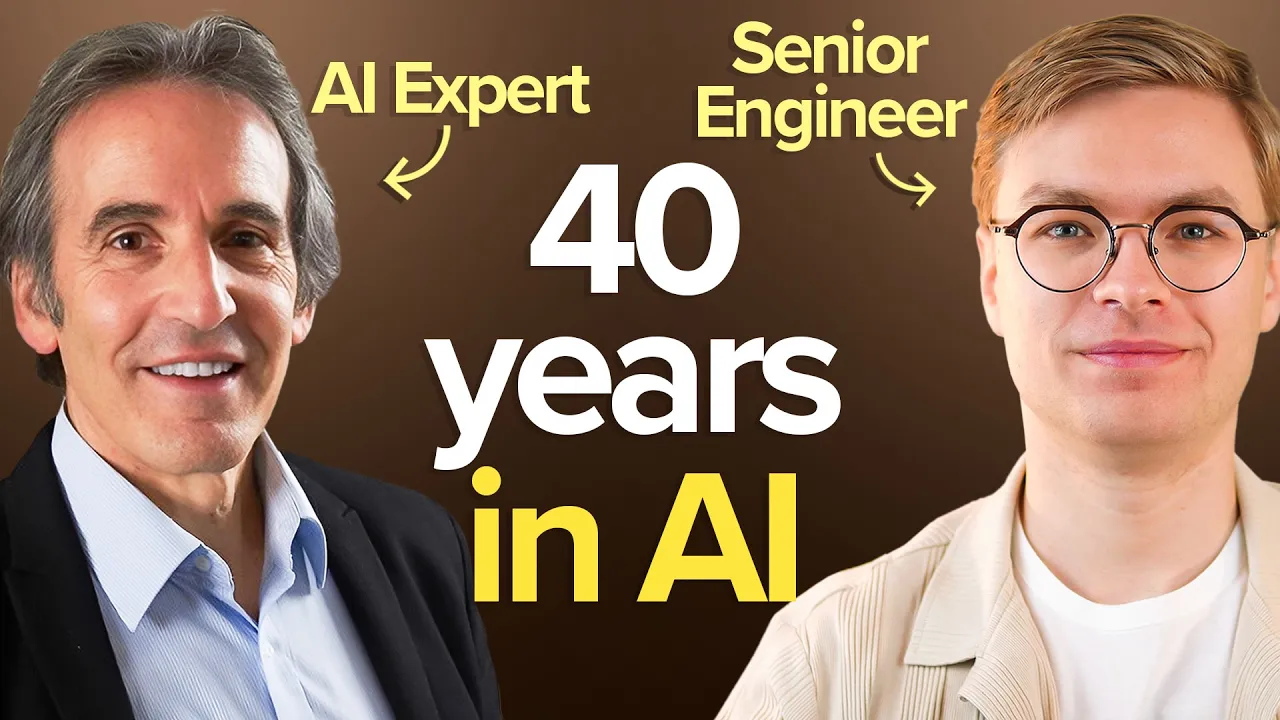
There’s a common assumption in AI implementation that the ROI comes from replacing human workers with automation. Fewer employees means lower costs, right? But I recently interviewed an AI engineer with 40 years of experience who built his entire career on the opposite approach. And his solutions often delivered better returns than the competition precisely because he refused to replace people.
Let me share a story that will challenge how you think about AI ROI.
The Sum of Exceptions
He was working on a planning system that would automate complex scheduling for a company he’d been consulting with for 10 years. The AI model was brilliant. It worked exactly as designed. Everything looked perfect on paper.
Then, eight in the morning on launch day, he had an insight that changed everything. He called the users in for an emergency meeting, and they all went white thinking something was terribly wrong. The manager came in and said, “Just listen to him. He knows what he’s talking about.”
Here’s what he realized: there’s a lot of information that isn’t in any system, and that information is critical. What happens when there’s snow on the road and the truck is 15 minutes late, but you’ve already prepared all the work for that truck? What about when someone is sick and gets replaced by a temporary worker who isn’t familiar with the process?
He called this the “sum of exceptions.” Every business has these tiny exceptions that seem insignificant individually. But when you add them up, they’re absolutely critical to actually getting work done. And you can’t automate them away because they’re contextual, human, and constantly changing.
Not every business is Amazon with standardized boxes and processes. Most companies deal with non-standard products, variable conditions, and human judgment calls that make a real difference.
Augmentation Over Replacement
So what did he do? Instead of replacing the planners, he created a system that suggested optimal schedules, and the planners would modify them with their real-life knowledge that wasn’t in any database. The AI handled the complex optimization that would take humans hours. The humans handled the exceptions and contextual knowledge that no system could capture.
But here’s where it gets really interesting. He didn’t just save their jobs. He displayed the ROI in real time, showing each planner exactly how much money they were making the company earn. It became like a video game. They got crazy competitive about improving efficiency.
And then he convinced the CEO to give them bonuses based on that performance. The CEO didn’t care because saving a million euros makes paying someone an extra thousand euros completely worthwhile. Those planners’ salaries increased by 10, 15, sometimes 20% per month. And they loved using the system because it made them more valuable, not obsolete.
Compare that to implementations where you replace workers. You get resistance, sabotage, people hiding information, and systems that fail because they’re missing critical contextual knowledge. His approach created enthusiastic adoption and systems that ran successfully for 20 years.
The Business Case Against Replacement
Here’s another example that really drives this home. He worked with a company in Belgium where he saved 1% of their yearly consumption of an expensive resource. We’re talking millions and millions of euros in savings. There were five people doing this work manually, and his system could beat them every time.
The company was ready to eliminate those positions. But he refused. He said either you keep these five people, or I’m walking away right now. Even though he had financial problems at the time, debt and a mortgage, he literally threw his car keys on the table and was prepared to leave.
His reasoning was simple but profound. These five people had been working on this problem for five years. IBM had tried. MIT had tried. Nobody succeeded except him. And why did he succeed? Because those five people trusted him and told him everything they knew. He put their expertise into his algorithms.
If he let them get fired, he’d never get that level of trust and knowledge transfer again. Every future project would be harder because people would see him as a threat instead of someone who makes them better at their jobs.
The company kept all five people. And that story spread. CEOs talk to each other. His reputation became: you can trust him, he won’t charge much, and he won’t hurt your people. That reputation brought him decades of high-value contracts.
Better ROI Through Trust
Think about the long-term ROI calculation here. Yes, you might save money in year one by cutting headcount. But what about years two through twenty? What happens when you need to update the system, when business conditions change, when you discover edge cases nobody anticipated?
If you kept the human experts and made them more effective, they’re invested in the system’s success. They’ll help you improve it, they’ll advocate for it internally, and they’ll cover the gaps that any automated system will inevitably have.
He mentioned companies that increased their sales five times with the same personnel. Nobody was ever fired. The AI automation strategy was about scaling human capability, not replacing humans. And that approach consistently delivered better business outcomes.
Glass Boxes Instead of Black Boxes
Another key principle in his approach was creating what he called “glass box” systems instead of black boxes. The users could see how decisions were made. They could modify the instructions and parameters. It wasn’t some mysterious AI that they had to trust blindly.
This matters tremendously for adoption and long-term success. When users understand the system and can adjust it based on their expertise, they take ownership. It becomes their tool rather than their replacement.
And when business conditions change, which they always do, you’re not stuck waiting for the AI vendor to retrain models or adjust algorithms. The people who know the business best can adapt the system themselves within the framework you’ve created.
The Path Forward for AI Engineers
If you’re building AI solutions today, this approach might seem counterintuitive when everyone talks about how AI will replace jobs. But think about which projects actually succeed long-term and which ones get abandoned after six months.
The ones that succeed typically augment human decision-making rather than trying to automate it completely. They give people superpowers rather than making them obsolete. And they’re built with input from the people who actually do the work, not imposed from above.
Look for opportunities where you’re not hurting people. Find domains where the goal is to help existing workers be more effective, more efficient, more valuable to their organizations. That’s where you’ll build trust, get deep knowledge transfer, and create solutions that actually last.
Your reputation as someone who improves businesses without destroying livelihoods becomes a massive competitive advantage. And the business impact you create will often exceed what’s possible with pure replacement strategies because you’re combining AI capabilities with irreplaceable human expertise.
The future of AI engineering isn’t about replacing humans. It’s about making humans more capable than ever before.
To see the complete discussion about building ethical, high-ROI AI solutions that last decades, watch the full video tutorial on YouTube. The interview includes additional real-world examples and insights from 40 years of successful AI implementation. If you want to learn more about building sustainable AI solutions, join the AI Engineering community where we discuss approaches that create value without causing harm.