Autonomous Coding Agents: A Practical Guide to AI Autonomous Development
A new divide is emerging in software development. Not between senior and junior engineers, but between those who have learned to leverage autonomous coding agents and those still relying on manual workflows. The productivity gap widens daily as autonomous development matures from experimental novelty to production-ready tooling.
Through implementing AI systems at scale, I have watched this transition unfold. Teams adopting autonomous agents complete projects faster, iterate more quickly, and maintain higher code quality than those using traditional approaches or basic copilots.
Beyond Copilots: The Autonomous Difference
Traditional AI copilots function as sophisticated autocomplete. They predict your next line based on context. Autonomous coding agents operate differently. They accept goals, plan execution strategies, take actions, observe results, and iterate until objectives are met.
This autonomy changes the nature of your interaction with AI tools. Instead of constantly directing each keystroke, you describe outcomes and let the agent determine implementation details. The mental shift mirrors moving from micromanagement to delegation with a capable team member.
The practical implications are significant. Complex refactoring tasks that required tracking state across dozens of files become single requests. Debugging sessions where you would manually trace execution flow become autonomous investigations. The agent does the tedious work while you focus on design decisions.
Implementing Autonomous Agents Safely
The biggest concern engineers raise about autonomous agents involves safety. Giving AI tools permission to execute commands and modify files feels risky. This concern is valid but solvable.
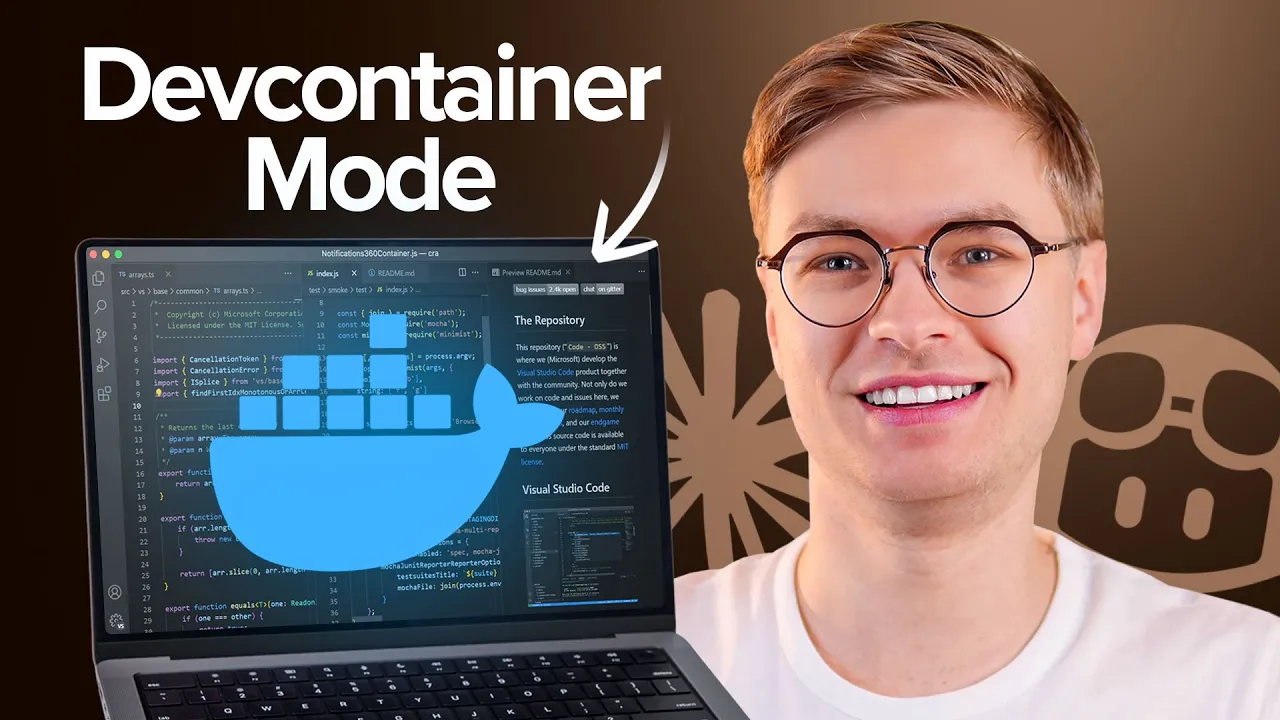
Container isolation provides the foundation for safe autonomy. Running agents inside dev containers creates a sandbox where destructive actions affect only the container filesystem. Your personal files, credentials, and other projects remain protected on your host machine.
With proper isolation, you can enable full autonomous mode without anxiety. The agent reads files, runs commands, and executes scripts at maximum speed. If something goes wrong, you rebuild the container in minutes and continue working.
Permission scoping adds another layer of protection. Start with minimal permissions and expand only as needed. Agents that only need to read and write code files should not have access to network operations or system utilities.
Workspace boundaries prevent agents from wandering into unrelated projects. Configure mount points to expose only the current project, keeping the rest of your development environment invisible and untouchable.
Effective Autonomous Workflows
Autonomous agents work best with clear objectives and sufficient context. Vague instructions produce unpredictable results. Well-structured requests generate reliable outcomes.
Session initialization matters significantly. Begin each working session by orienting the agent to your codebase structure, coding standards, and current priorities. This context investment improves every subsequent interaction.
Task decomposition remains your responsibility. Rather than requesting entire features, break work into verifiable milestones. This approach lets you course-correct before errors compound and provides natural checkpoints for review.
Result verification cannot be skipped. Autonomous agents move fast, which means errors accumulate quickly if unchecked. Establish testing pipelines that validate agent output automatically. Trust but verify.
The Productivity Transformation
Engineers who master autonomous development describe the experience as having a tireless junior developer on call. The agent handles routine implementation while you focus on architecture, design, and problem solving.
The time savings compound. Tasks that consumed hours become minutes. Context switching decreases as agents handle the mechanical aspects of implementation. Mental energy previously spent on syntax and boilerplate becomes available for higher-level thinking.
This productivity gain requires adaptation. The skills that made you effective with traditional tools need augmentation with new capabilities. Task scoping, prompt engineering, and delegation become core competencies. The AI pair programming mental model provides a useful framework for thinking about this collaboration.
Getting Started with Autonomous Development
Begin with low-stakes experiments. Choose a project where mistakes carry minimal consequences. Practice giving the agent increasingly complex tasks while observing its behavior and adjusting your approach.
Focus initially on tasks with clear success criteria. Refactoring with existing test coverage works well because the tests validate agent output. Bug fixes with reproducible issues provide similarly clear feedback loops.
As confidence grows, expand to more complex work. Feature implementation, documentation generation, and dependency updates all benefit from autonomous agent assistance once you understand the tool’s capabilities and limitations.
Watch the complete setup and demonstration of autonomous coding agents in action: Autonomous Coding Agents on YouTube
Want to learn from engineers already using autonomous agents in production? Join the AI Engineering community where we share practical workflows, troubleshoot common issues, and continuously improve our approaches.