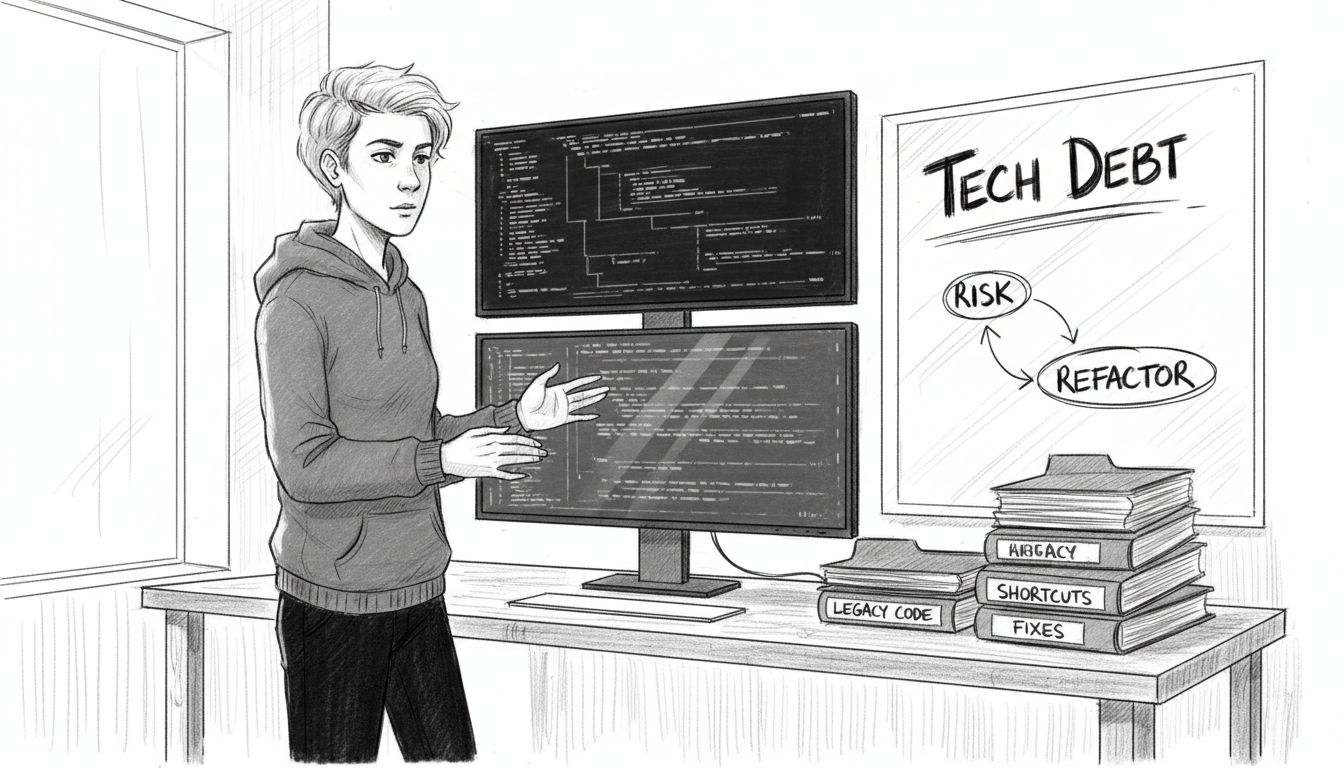
Technical Debt Explained Complete Guide for AI Engineers
Most american software teams will agree that unchecked technical debt can quietly derail even the most promising projects. Studies show that more than 50 percent of development hours in some organizations are lost to fixing issues caused by past shortcuts. Understanding how technical debt accumulates is crucial for anyone involved in building or maintaining software, especially in fast-moving fields like artificial intelligence. This guide reveals the sources, impacts, and proven strategies for managing technical debt before it spirals out of control.
Table of Contents
- Defining Technical Debt In Software Projects
- Types Of Technical Debt And Key Distinctions
- How Technical Debt Accumulates In AI Systems
- Impacts On AI Development And Team Productivity
- Managing, Reducing, And Preventing Technical Debt
Defining Technical Debt in Software Projects
Technical debt represents a critical concept in software development that describes the long-term consequences of choosing expedient but suboptimal solutions during system design and implementation. At its core, technical debt refers to the future cost incurred when developers prioritize quick solutions over more comprehensive and sustainable approaches.
Just like financial debt accumulates interest, technical debt grows more complex and expensive to resolve over time. When software engineers take shortcuts or implement temporary fixes, they create code that may work in the short term but becomes increasingly difficult and costly to maintain. These compromises can manifest in various forms - from poorly structured code and inadequate documentation to architectural limitations that restrict future system scalability.
The origins of technical debt often emerge from several common scenarios:
- Tight project deadlines that demand rapid development
- Limited resources or budget constraints
- Lack of comprehensive system design
- Rapidly changing technological landscapes
- Pressure to deliver functional products quickly
Understanding technical debt is not about placing blame but recognizing it as a strategic decision with measurable trade-offs. Qualitative assessments of system maintenance costs reveal that unaddressed technical debt can exponentially increase development complexity. Successful software teams proactively manage this debt by allocating time for regular code refactoring, maintaining clear documentation, and making deliberate architectural choices that balance immediate needs with long-term system health.
Types of Technical Debt and Key Distinctions
Technical debt is not a monolithic concept but a nuanced spectrum of challenges that software engineers encounter during system development. Different categories of technical debt represent unique challenges that demand targeted strategies for resolution and management.
The primary types of technical debt can be broadly classified into several critical categories:
- Code Debt
- Poorly written or inefficient source code
- Lack of code optimization
- Redundant or duplicative code segments
- Minimal adherence to coding standards
- Design Debt
- Suboptimal architectural decisions
- Rigid system structures that limit future modifications
- Inadequate modularization
- Poor separation of concerns
- Documentation Debt
- Insufficient or outdated system documentation
- Missing comments explaining complex code logic
- Lack of comprehensive API documentation
- Incomplete system architecture diagrams
- Testing Debt
- Incomplete test coverage
- Absence of automated testing frameworks
- Manual testing processes
- Limited regression testing capabilities
Each type of technical debt introduces specific risks and requires unique mitigation approaches. Software teams must recognize these distinctions to develop targeted strategies that address underlying systemic challenges. Proactive identification and systematic resolution of these debt categories can significantly enhance system maintainability, scalability, and long-term performance.
How Technical Debt Accumulates in AI Systems
Technical debt in artificial intelligence systems emerges through a complex series of incremental compromises that gradually erode system performance and maintainability. Machine learning software development introduces unique challenges where seemingly minor implementation decisions can snowball into significant long-term technical complications.
The accumulation of technical debt in AI systems typically follows several critical pathways:
-
Rapid Prototype Development
- Quick model iterations that prioritize speed over quality
- Inadequate data preprocessing techniques
- Minimal attention to code modularity
- Experimental approaches with limited documentation
-
Data Management Shortcuts
- Inconsistent data cleaning processes
- Lack of comprehensive data versioning
- Poor feature engineering practices
- Insufficient data validation mechanisms
-
Model Design Compromises
- Overfitting models to specific datasets
- Neglecting model interpretability
- Using complex architectures without clear justification
- Minimal hyperparameter tuning documentation
Automated management strategies become crucial for mitigating these technical debt risks in AI systems. By proactively identifying and addressing these accumulation patterns, AI engineers can develop more sustainable, scalable, and maintainable machine learning solutions that resist long-term performance degradation. Understanding these mechanisms allows teams to implement strategic interventions that prevent technical debt from compromising system reliability and efficiency.
Impacts on AI Development and Team Productivity
Technical debt transforms from a subtle development challenge into a significant productivity killer that can dramatically undermine AI team performance. Development effort increases exponentially as technical complexity grows, creating a cascading effect that erodes team efficiency and project momentum.
The multifaceted impacts of technical debt on AI development teams manifest through several critical dimensions:
-
Productivity Deterioration
- Increased time spent on maintenance instead of innovation
- Reduced velocity of new feature development
- Higher cognitive load for engineers
- Constant firefighting of legacy system issues
-
Resource Allocation Challenges
- Disproportionate engineering hours spent debugging
- Reduced capacity for strategic project planning
- Increased onboarding complexity for new team members
- Higher training and knowledge transfer costs
-
Psychological and Motivational Impacts
- Developer frustration with legacy system constraints
- Decreased job satisfaction
- Reduced innovation potential
- Higher risk of team burnout
Open-source software sustainability heavily depends on managing these technical debt challenges effectively. By recognizing and proactively addressing technical debt, AI development teams can transform potential productivity barriers into opportunities for continuous improvement, creating more resilient and adaptable engineering environments that foster innovation and team engagement.
Managing, Reducing, and Preventing Technical Debt
Technical debt management requires a strategic, proactive approach that integrates continuous improvement into the software development lifecycle. Effective strategies prioritize long-term code quality over short-term expedience, demanding rigorous practices that systematically address potential technical challenges before they escalate.
AI engineers can implement several key strategies to combat technical debt:
- Continuous Code Refactoring
- Regular systematic code reviews
- Incremental architecture improvements
- Eliminating redundant code segments
- Standardizing coding practices
- Automated Debt Detection
- Implementing static code analysis tools
- Setting up automated quality checks
- Establishing clear technical debt metrics
- Creating quantifiable debt reduction targets
- Strategic Prioritization
- Categorizing technical debt by severity
- Allocating dedicated time for debt reduction
- Creating technical debt management roadmaps
- Balancing innovation with system maintenance
- Cultural and Process Interventions
- Promoting code quality awareness
- Encouraging collaborative knowledge sharing
- Developing robust documentation practices
- Integrating technical debt discussions into sprint planning
Automated management techniques can dramatically improve software maintainability by providing systematic approaches to identifying and resolving potential technical challenges. By treating technical debt as a continuous optimization process rather than an occasional maintenance task, AI development teams can create more resilient, adaptable, and high-performing software ecosystems that remain competitive and innovative.
Want to Learn How to Build AI Systems That Don’t Crumble Under Technical Debt?
Want to learn exactly how to identify and eliminate technical debt before it cripples your AI projects? Join the AI Engineering community where I share detailed tutorials, code examples, and work directly with engineers building sustainable machine learning systems.
Inside the community, you’ll find practical, results-driven technical debt management strategies that actually work for growing companies, plus direct access to ask questions and get feedback on your implementations.
Frequently Asked Questions
What is technical debt in software projects?
Technical debt refers to the long-term costs incurred when developers prioritize quick solutions over optimal ones, leading to maintenance and scalability challenges in the future.
How does technical debt affect AI development teams?
Technical debt can significantly hinder productivity by increasing maintenance time, reducing feature development velocity, and creating a higher cognitive load for engineers.
What are the main types of technical debt?
The primary types of technical debt include code debt, design debt, documentation debt, and testing debt, each requiring distinct strategies for management and resolution.
What strategies can AI engineers implement to manage technical debt?
AI engineers can manage technical debt through continuous code refactoring, automated debt detection, strategic prioritization of debt reduction, and fostering a culture of code quality awareness.
Recommended
- Why AI Coding Tools Use Outdated Information
- Why Does AI Generate Outdated Code and How Do I Fix It?
- Why Does AI Give Outdated Code and How to Fix It?
- Why AI Developers Need Version Control More Than Traditional Programmers
- AI Search Engines Explained: Features, Types, and Impact - FAII
- AI in Search Rankings: The Complete Expert Guide - FAII