Foundation Skills for Long-Term AI Engineering Careers
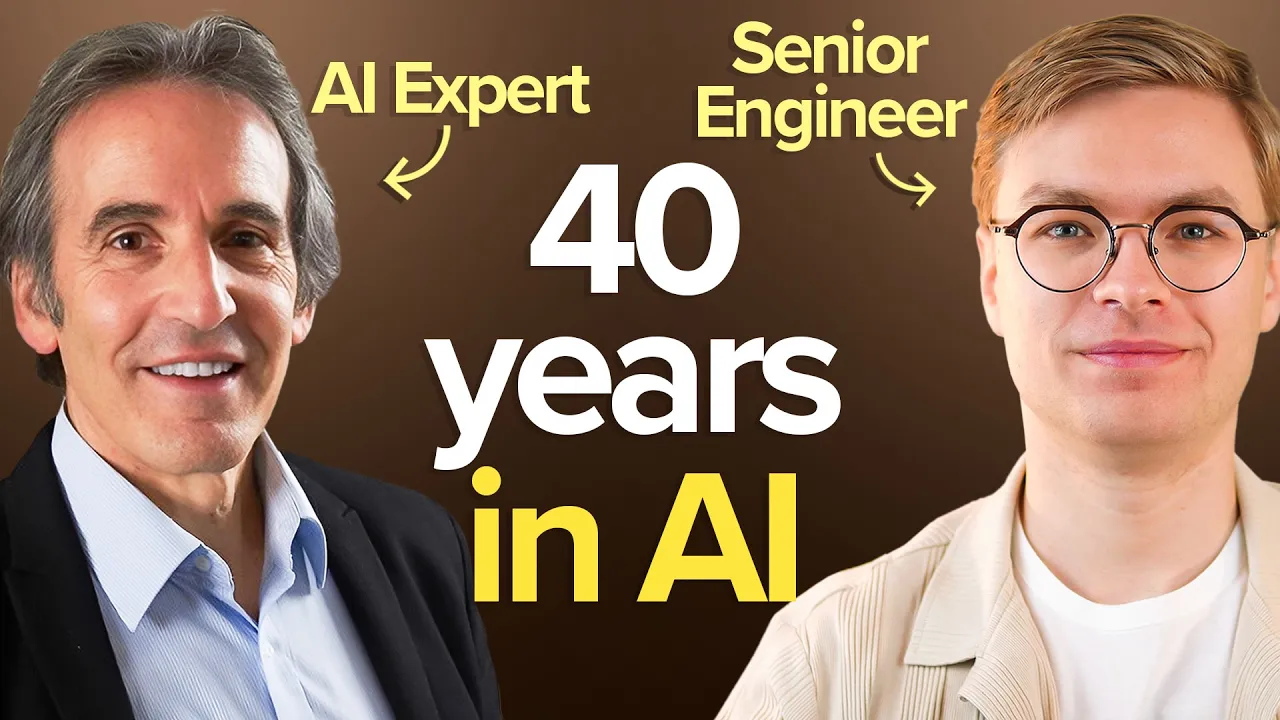
Every day there’s a new AI influencer who started six months ago telling you which framework to learn or which certification to get. But I recently interviewed someone who’s been building AI systems since the 1980s, and his advice about foundational skills will completely change how you think about your career.
His number one foundational skill? It has nothing to do with information technology. Nothing at all. And if you’re looking for the real secrets to surviving AI winters and thriving through boom cycles, you need to hear this.
Cognitive Science Before Computer Science
His background started with cognitive science at Sorbonne universities. Not coding. Not algorithms. Understanding how human beings think. He and his wife created a language school, and they became obsessed with understanding how people learn. Why were students so slow? Why did they forget vocabulary but remember grammar? Why did they drift between subjects during conversation?
They would spend evenings analyzing these patterns, developing statistical methods to track learning progress. Which grammar rules stuck? Which phonetics created problems? He encoded all of this mathematically, going deeper and deeper into understanding how humans actually think.
And here’s the insight that shaped his entire career: this understanding of human cognition became more valuable than any technical skill he later developed. When AI winters came and everyone else was scrambling, he just kept calling his work “automation” instead of “AI” and kept getting hired because he understood people.
When the boom came in 2015, he was ready. Not because he’d been coding AI the whole time, but because he’d built a deep foundation in understanding how humans process information, make decisions, and solve problems. That foundation never became obsolete.
Process Over Programming
Here’s something he said that really resonated with me: “If you talk code, you’re gone. If you talk process, you’re there.”
Most of his books spend the majority of time on process, and the code is almost generated automatically. Why? Because once you deeply understand the process, the human workflow, and the actual problem being solved, the technical implementation becomes almost trivial.
Think about what that means for your career development. Everyone is learning the same AI models, the same frameworks, the same tools. That knowledge becomes commoditized almost immediately. But understanding how businesses actually operate? How decisions really get made? How humans interact with systems? That’s rare and valuable.
He mentioned working 99% of his career with CEOs, shareholders, and top executives. Not because he was the best coder, but because he could translate between human processes and automated systems. He understood what executives cared about, how factory workers actually did their jobs, and how to bridge that gap.
This is the kind of AI engineering mindset that survives every technology shift. The tools change, but the fundamental challenge of understanding and improving human processes remains constant.
The Power of No Repetition
Here’s another foundation that shaped his career: he refused to repeat himself. There’s one rule in his life, he said. No repetition. That’s why he never worked for a company in a traditional job. That’s why every year he wanted to do something different in AI. He never did the same thing two years in a row.
This might sound counterintuitive when everyone tells you to specialize. But think about what this approach created. Over 40 years, he built expertise across textile manufacturing, aerospace maintenance, luxury goods, distribution, and countless other industries. Each project built on the previous ones, but he never got stuck doing the same thing over and over.
When you refuse repetition, you’re forced to keep learning, keep adapting, keep building new mental models. And those mental models become transferable across domains in ways that specific technical knowledge never does.
This connects to what I’ve written about learning strategies for AI mastery. The most effective approach isn’t grinding the same tutorials over and over. It’s constantly exposing yourself to new contexts, new problems, new ways of thinking.
Surviving AI Winters
Let me share how these foundations helped him survive the AI winter that came right after he started in the 1980s. He registered patents in 1982 and 1986, one in coding and one in conversational robots. But then AI became unpopular and funding dried up.
Did he panic? No. He just stopped calling it AI. He’d tell clients, “You can do this manually or automatically.” Same technology, different framing. And because he understood the business value and the human processes, companies kept hiring him.
This is crucial for anyone worried about AI career anxiety right now. The specific branding and hype around AI will come and go. We might enter another AI winter. But if your foundation is understanding human cognition, business processes, and how to create genuine value, you’ll keep working regardless of what the technology is called.
Building Your Foundation Today
So what does this mean for you practically? Start studying how people think and work. Not just in an abstract way, but in specific contexts. Go spend time watching people do their jobs. Ask them why they make certain decisions. Understand what makes work hard versus easy for them.
Build your career roadmap around understanding processes first, technology second. When you approach a new domain, don’t immediately jump to “what AI model should I use?” Instead ask, “how do people currently solve this problem? What do they know that isn’t written down? Where do the textbook approaches fail in real life?”
Embrace no repetition. Don’t get comfortable doing the same type of project over and over. Push yourself into new industries, new problem spaces, new contexts. Each one builds your foundational understanding of how humans and businesses actually work.
And most importantly, recognize that the real added value of your career will be everything except coding. People can get coding knowledge from books, YouTube, courses, anywhere. But they can’t get the deep understanding of human processes and business contexts that comes from intentionally building these foundations over years.
The engineers who build careers lasting 40 years won’t be the ones who knew the most about transformers or whatever comes next. They’ll be the ones who understood people, processes, and value creation at a fundamental level.
To hear more insights from this veteran AI engineer’s 40-year career, including specific examples of how these foundations played out across different industries, watch the full video tutorial on YouTube. The complete interview provides context and stories that bring these principles to life. If you’re serious about building future-proof AI skills, join the AI Engineering community where we discuss career development beyond just the latest technical trends.